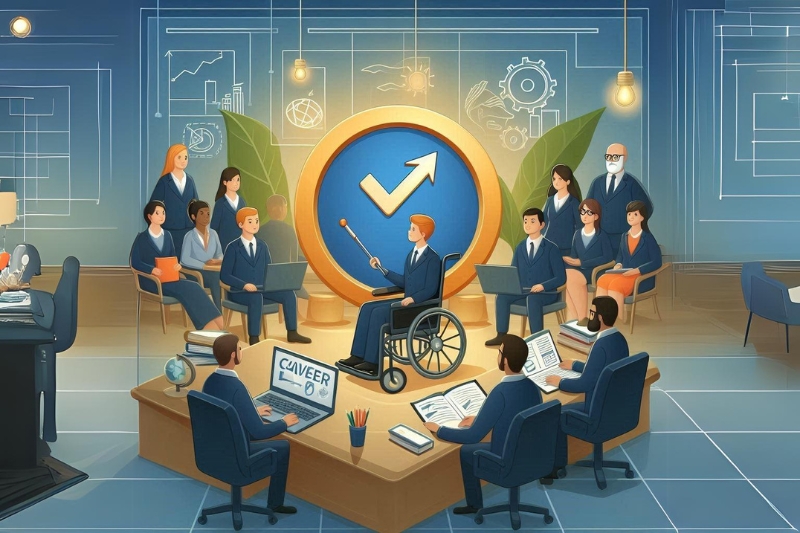
Career Development for Handicapped and Blind Students: Empowering the Future
Career development is a crucial aspect of education that prepares students for the
workforce and helps them achieve their professional goals. For handicapped and
blind students, this process involves unique challenges, but with the right support
and resources, they can successfully navigate their career paths.
1. Early Career Exploration
Introducing career exploration early in a student’s education can help them discover
their interests and strengths.
● Career Counselling: Provide access to career counselling services that are
tailored to the needs of handicapped and blind students. Counsellors can help
students identify career interests, set goals, and plan their educational paths.
● Job Shadowing and Internships: Encourage participation in job shadowing
and internships. These experiences allow students to explore different career
fields and gain valuable insights into the workplace.
● Mentorship Programs: Connect students with mentors who have similar
disabilities and have achieved success in their careers. Mentors can offer
guidance, advice, and inspiration.
2. Overcoming Barriers to Employment
Handicapped and blind students may face specific barriers to employment, but with
the right strategies, these can be overcome.
● Addressing Employer Perceptions: Work with students to address potential
biases or misconceptions employers may have about hiring individuals with
disabilities. This can include preparing them to discuss their strengths, skills,
and the value they bring to the workplace.
● Disability Employment Programs: Utilize disability employment programs
that connect students with job opportunities and provide support during the
transition to employment. Programs like Vocational Rehabilitation can offer
valuable resources and services.
● Networking Opportunities: Encourage students to build a professional
network. Networking can lead to job opportunities and provide support from
others in their chosen field.
3. Continuous Learning and Professional Development
Career development doesn’t end when students enter the workforce. Continuous
learning and professional development are important for long-term career success.
● Lifelong Learning: Encourage students to pursue lifelong learning
opportunities, such as online courses, certifications, and workshops. This
helps them stay competitive in their field and advance in their careers.
● Professional Organisations: Join professional organisations that offer
resources, networking opportunities, and continuing education. Many
organisations have specific groups or resources for professionals with
disabilities.
● Career Advancement Strategies: Teach students about strategies for career
advancement, including how to seek promotions, negotiate salaries, and take
on leadership roles.
Conclusion:-
Career development is a vital part of empowering handicapped and blind students to
achieve their professional goals and build fulfilling careers. By providing early career
exploration opportunities, skill development, accessible education, and ongoing
support, educators and families can help these students navigate the path to
employment with confidence. Overcoming barriers to employment and encouraging
continuous learning are also essential steps in ensuring long-term success. With the
right resources and support, handicapped and blind students can thrive in their
careers and contribute meaningfully to the workforce.