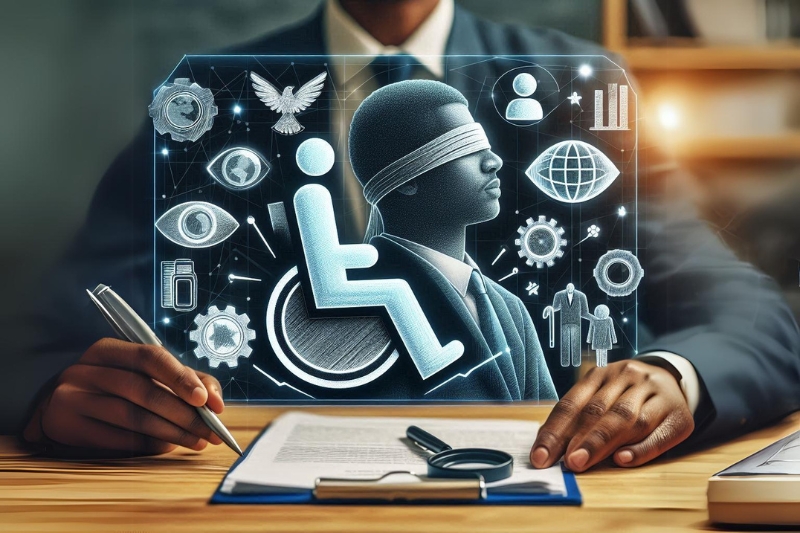
Navigating Public Services: Ensuring Accessibility for the Blind and
Handicapped
Accessibility in public services is crucial for ensuring that everyone, including
individuals who are blind or have physical disabilities, can fully participate in
community life. From navigating government buildings to accessing essential
community programs, creating accessible environments helps foster inclusion
and equal opportunity.
1. Accessibility in Government Buildings
Government buildings are often the first point of contact for many services,
making accessibility a priority. Ensuring that these spaces are usable by
everyone is essential.
● Physical Accessibility: Install ramps, elevators, and automatic doors
to make it easier for individuals with mobility challenges to navigate the
building. Ensure that pathways are clear and wide enough to
accommodate wheelchairs and mobility aids.
● Tactile and Audible Signage: Use braille and large-print signage to
help blind and visually impaired individuals navigate. Include audible
signals at key locations, such as entrances and elevators, to guide
those who rely on auditory cues.
2. Digital Accessibility: Making Online Services Usable
With many services now offered online, digital accessibility is vital for ensuring
that blind and handicapped individuals can access information and complete
tasks independently.
● Accessible Websites: Design websites with features that support
screen readers and other assistive technologies. Ensure that all content
is navigable via keyboard and that images include descriptive alt text.
● Accessible Online Forms: Create forms that are easy to fill out using
screen readers and other assistive devices. Avoid complex layouts and
ensure that error messages and instructions are clear and accessible.
3. Inclusive Communication
Effective communication is key to ensuring that all individuals can access and
understand information provided by public services.
● Alternative Formats: Provide information in multiple formats, including
braille, large print, and audio recordings. This allows individuals with
different needs to access the content in a format that works best for
them.
● Sign Language Interpretation: Offer sign language interpretation
services at public meetings and events to support individuals who are
deaf or hard of hearing.
4. Training and Awareness for Staff
Staff members are often the first point of contact in public services, making
their training on accessibility issues essential.
● Accessibility Training: Train staff to understand and address the
needs of blind and handicapped individuals. This includes providing
assistance, using accessible communication methods, and
understanding how to operate assistive technologies.
● Empathy and Sensitivity: Promote empathy and sensitivity towards
individuals with disabilities to ensure respectful and supportive
interactions.
Conclusion:-
Ensuring accessibility in government and community programs is essential for
creating a more inclusive and equitable society. By focusing on physical and
digital accessibility, effective communication, staff training, and continuous
improvement, we can create public services that are welcoming and usable for
everyone, including individuals who are blind and handicapped. Together, we
can work towards a world where everyone has the opportunity to fully
participate in and benefit from public services.